
The Maciej Drygas Collection
Director Maciej J. Drygas is a renowned film and radio director, screenwriter, producer, and professor at the Polish National Film School in Łódź. His works have received numerous prestigious awards, including the European Film Academy Award for Best Documentary for Hear My Cry (1991), the Prix Italia for the radio documentary “Last Will” (1992), the Grand Prix at the Monte Carlo International Television Festival for State of Weightlessness (1995), and the award for Best Feature-Length Documentary at the Cinema Verité festival in Tehran for Abu Haraz (2013). Drygas also wrote the libretto for the opera “Qudsja Zaher”, which was nominated for the International Opera Awards in London in 2014. He is the originator and founder of the Home Movie Archive at the Museum of Contemporary Art in Warsaw. His films and radio documentaries have been broadcast across Europe, as well as in Canada, Japan, Brazil, South Africa, New Caledonia, and Australia.
Drygas’s latest, Trains, available for early access streaming on 1stLook via EPF Media, is his most formally rigorous film and his most ambitious. Winner of the Best Film Award at IDFA, Unseen Films call it "the most hypnotic film you will see this year. A stunner...”
The Maciej Drygas Collection collection includes the following titles:
 Abu Haraz
In a small village in northern Sudan, everything changes when a huge dam is built on the Nile, threatening to flood the land and submerge the village under 35 meters of water.
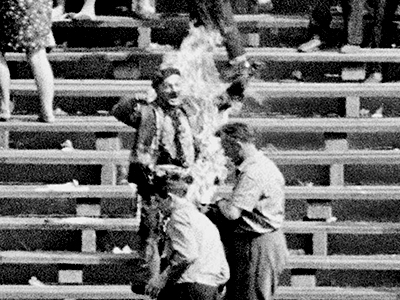 Hear My Cry
In 1968, Ryszard Siwiec set himself on fire to protest the Soviet invasion of Czechoslovakia. Hear My Cry reconstructs this forgotten act of resistance.
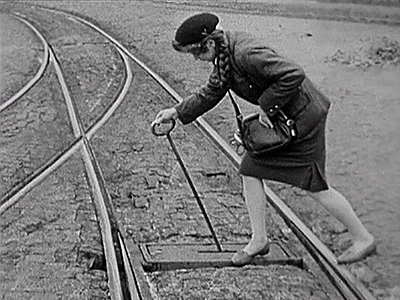 One Day in People's Poland
What appears to be an ordinary “day in the life” becomes a powerful exploration of a paranoid political system, where surveillance, propaganda, and the official ideology shaped not only public life but also personal experience.
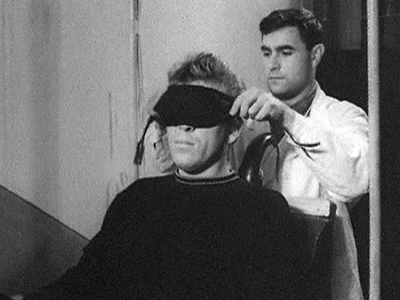 State of Weightlessness
Drawing on rare audio recordings from orbit, the film explores how cosmonauts experienced isolation, suspension, and uncertainty while the political system that sent them into space was collapsing below.
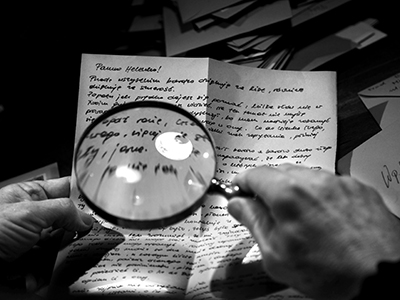 Violated Letters
Between 1945 and 1989, specialized units of Poland’s secret police read, cataloged, and reported on millions of private letters — letters written by ordinary people about daily life, love, anger, fear, ambition, and resistance.
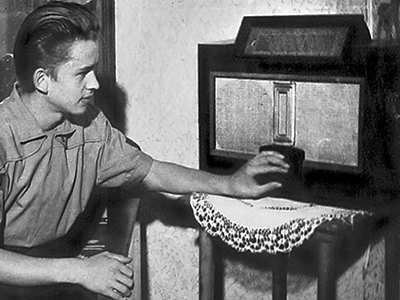 Voice of Hope
 traces how Radio Free Europe’s broadcasts became a source of truth and inspiration under Poland’s communist regime.
Visit the title page to preview any of the titles above.
